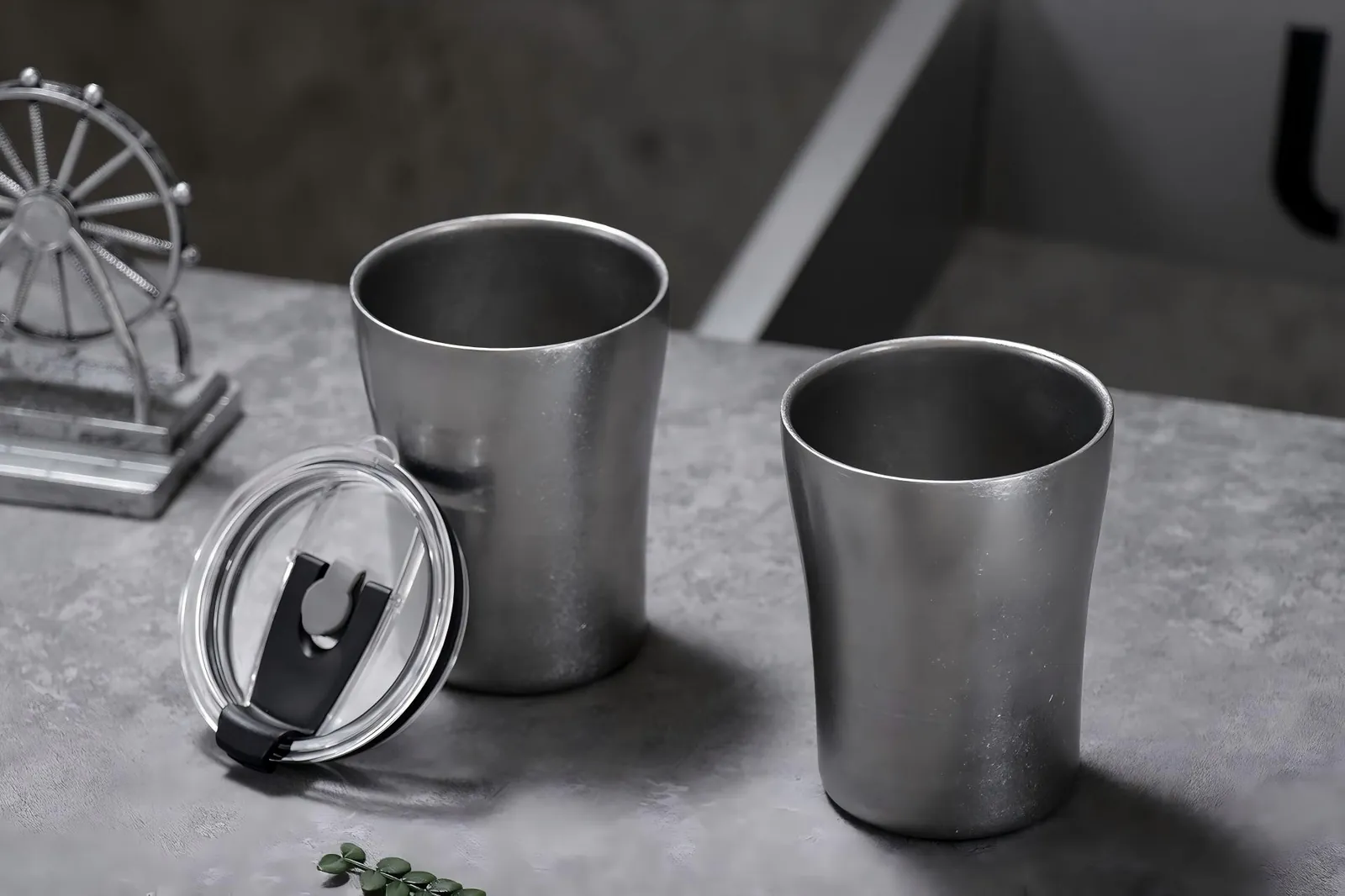
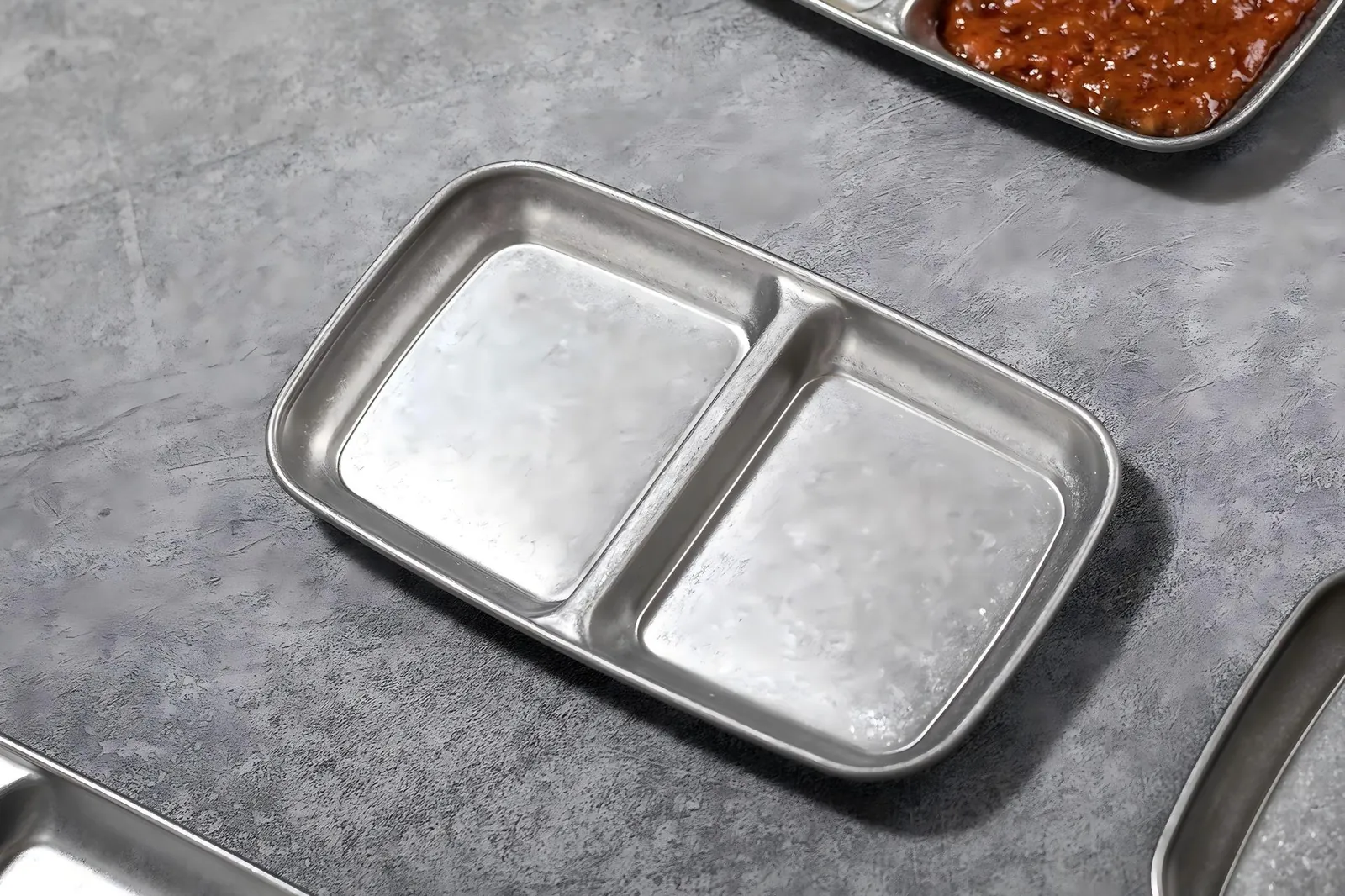
Yes — 304 stainless steel cutlery is food safe for daily household and commercial use. If you are asking is 304 stainless steel cutlery food safe, the evidence-backed answer is straightforward: 304 (18/10) stainless steel is one of the most widely used food-contact alloys on earth, recognized by the U.S. FDA as GRAS (Generally Recognized as Safe) for its chromium and nickel content, and governed in Europe by (EC) 1935/2004 food-contact material law. At ZACSO, our Snowflake Matte Gray 304 tableware was tested by SGS in 2022 (sample-based) for both EU heavy-metal migration and FDA total-chromium safety, with results showing compliant and PASS. This guide explains exactly what that means for your brand, your buyers, and your next OEM order.
You have probably heard conflicting claims online — "304 is medical grade," "stainless steel leaches heavy metals," "only 316 is safe." Most of that noise confuses material grade with product certification. So let's separate the two. By the end you will know what regulators actually require, what a real SGS test report shows, and which questions to ask any supplier before you put their cutlery in front of your customers.
Key Takeaways
- 304 (18/10) stainless steel is GRAS-recognized by the FDA for food contact; its chromium and nickel content is not treated as a safety risk at normal use levels.
- In the EU, food-contact stainless steel must satisfy (EC) 1935/2004; Germany's LFGB sets the same baseline for the German and broader DACH market.
- ZACSO's Snowflake Grey tableware series was tested by SGS in 2022 (sample-based): EU sensory + heavy-metal migration = compliant; FDA total chromium + dishwasher safety = PASS.
- 304 can release trace nickel under acidic, long-duration contact, but measured levels sit far below regulated limits for the overwhelming majority of users.
- Request the sample test report before you order, and plan to retest about every 2 years as your batch formula or production line changes.
What Is 304 Stainless Steel, Exactly?
Before we discuss safety, we need a precise definition, because "304" is an alloy specification, not a quality badge.
304 stainless steel is an austenitic chromium-nickel alloy containing roughly 18% chromium and 8–10.5% nickel — which is why you will often see it written as 18/10 or 18/8 stainless steel. The chromium forms a thin, self-healing passive layer on the surface that resists rust and prevents the underlying metal from reacting with food. The nickel improves formability and corrosion resistance, which is why 304 bends cleanly into fork tines and spoon bowls without cracking.
Here is the part that confuses buyers: 304, 18/10, and 18/8 are largely the same family of material. "18/10" tells you the nickel is on the higher end of the 304 range. A common question we hear is whether 18/10 and 304 are different grades — they are not. If you want that distinction spelled out, our guide on 18/10 vs 304 Stainless Steel Flatware: Clearing the Confusion breaks it down with a side-by-side table.
One firm boundary at ZACSO: we produce only 304 (18/10) food-grade stainless steel. We do not offer 316 or 430. That single-material focus keeps our quality system simple and our test evidence consistent across the 262+ ready-stock SKUs we carry.
Is 304 Stainless Steel Cutlery Food Safe? The FDA & EU Perspective
The short answer is yes, and it rests on two independent regulatory frameworks.
FDA GRAS Recognition (United States)
The U.S. Food and Drug Administration regulates materials that touch food under its food-contact substance rules. Stainless steel — including 304 — is recognized as GRAS for food-contact use because its chromium and nickel content does not pose a safety concern at the levels that migrate into food during normal use. In plain terms: the FDA treats 304 as a safe material for cutlery, cookware, and food-processing equipment.
It is important to say this precisely. An alloy grade being GRAS-recognized is not the same as a finished product being "FDA certified." No cutlery brand can claim the FDA "certifies" its spoons. What we can state, backed by testing, is this: 304 (18/10) stainless steel is GRAS-recognized by the FDA; the total chromium content of our sample was tested PASS by SGS, 2022 (sample-based).
EU (EC) 1935/2004 and the LFGB Baseline (Europe)
In the European Union, food-contact materials are governed by Regulation (EC) 1935/2004, which requires that materials do not transfer their constituents to food in quantities that could endanger human health or change the food's composition, taste, or odor. For metals, the Council of Europe's CM/Res(2013)9 sets specific migration limits for heavy metals such as lead, cadmium, nickel, and chromium.
Germany applies its own national food-contact law, the LFGB (Lebensmittel-, Bedarfsgegenstände- und Futtermittelgesetzbuch). For stainless cutlery, the LFGB effectively mirrors the EU baseline — so passing (EC) 1935/2004 with CM/Res(2013)9 migration limits means you also meet the German market's expectations. If you sell into Germany, "LFGB compliant" and "EU (EC) 1935/2004 compliant" point to the same safety floor.
This dual framework — FDA GRAS on one side, EU (EC) 1935/2004 + LFGB on the other — is exactly why international buyers (North America, Europe, Australia, Middle East) treat 304 as the default "safe" choice.
ZACSO's SGS Test Evidence (2022, Sample-Based)
Claims are cheap. Test reports are not. In 2022, ZACSO submitted its Snowflake Grey tableware series (雪花灰餐具系列 / SNOWFLAKE GREY TABLEWARE SERIES) to SGS — a globally recognized third-party testing laboratory — for two independent reports. Both were sample-based, meaning they tested representative production samples, not every single unit.
We say "sample-based" on purpose. It is the honest description, and it is what lets a buyer trust the result without us overselling it.
Report A — EU Sensory & Heavy-Metal Migration (Chinese report)
- Standard applied: EU (EC) 1935/2004 sensory requirement (no abnormal odor or taste) + Council of Europe CM/Res(2013)9 heavy-metal migration limits.
- Work order: SHHL2207030490CW-SH
- Sample: 雪花灰餐具系列 (Snowflake Grey tableware series)
- Result: Compliant — no off-odors or taste transfer, and heavy-metal migration within regulated limits.
Report B — FDA GRAS Total Chromium & Dishwasher Safety (English report)
- Standard applied: FDA GRAS recognition of stainless steel (total chromium content) + dishwasher safety assessment.
- Sample: SNOWFLAKE GREY TABLEWARE SERIES
- Result: PASS — total chromium content within the GRAS-recognized range, and the sample withstood dishwasher-safety evaluation.
What this means for you: when a buyer in the EU asks for migration evidence, you can point to Report A. When a U.S. or Australian buyer asks whether the material is FDA-recognized, you can point to Report B. Both were tested by SGS in 2022 (sample-based), and both came back clean for our signature Snowflake Matte Gray finish.
Want to see the documents yourself? We share the SGS sample reports on request. Contact our team for the test report → and we will send the PDFs so your compliance file is audit-ready.
Does 304 Leach Nickel? The Real Risk
This is the question that worries buyers most, so let's be direct.
Yes, 304 stainless steel can release trace amounts of nickel and chromium into food — but only under specific conditions: highly acidic food (like tomato sauce or citrus), high temperature, and long contact time (hours, not minutes). The amounts measured in accredited migration tests are tiny, typically far below the limits set by CM/Res(2013)9 and comparable frameworks.
For context, the European Food Safety Authority and national agencies have studied nickel migration from stainless steel for decades. The practical conclusion for cutlery is consistent: normal use — eating a meal, washing up, repeating daily — does not produce nickel exposure that approaches regulatory concern for the general population.
There is one genuine exception worth noting: a small fraction of people have nickel sensitivity (allergic contact dermatitis). For them, prolonged skin contact with nickel-releasing objects matters more than ingestion. If your brand serves a clinical, pediatric, or allergy-aware niche, that is a conversation to have with your supplier about surface finish and passivation — not a reason to reject 304 broadly.
The takeaway: 304 leaches nickel only in trace, regulated-safe amounts under extreme conditions. It is not a "toxic metal" story, and the SGS 2022 migration test for our Snowflake Grey series confirms the heavy-metal result was compliant.
How to Verify Food Safety Before You Order
Certifications expire, suppliers change, and alloys vary batch to batch. A smart buyer builds verification into the sourcing process.
Request the Sample Test Report
Never take "food grade" at face value. Ask every supplier for the actual third-party report — lab name, standard, work order, sample description, and date. A real report has a traceable work order number (ours is SHHL2207030490CW-SH) and a clear result line. If a supplier can only show a generic certificate with no lab, no standard, and no sample ID, that is a red flag.
Ready to audit your supply chain? Request ZACSO's SGS 2022 sample reports → and compare them against any other vendor you are considering.
Set a Retest Cadence (~Every 2 Years)
Because our evidence is sample-based from 2022, the responsible recommendation is to retest about every 2 years, or sooner if the production batch, material source, or finishing process changes. Food-safety evidence is a snapshot, not a lifetime guarantee. Building a retest rhythm into your OEM agreement protects both your brand and your end customers.
ZACSO supports this by keeping consistent 304 (18/10) material and a controlled Snowflake Matte Gray finishing process across our 262+ SKUs — which makes periodic retesting cheaper and more predictable than it would be with a mixed-material catalog.
Why Buyers Choose 304 (18/10): Three Real Stories
Numbers build trust, but stories make it stick. Here are three anonymized buyer situations from our B2B work.
Story 1 — The German retailer who almost lost a contract. A DACH-region home-goods buyer needed LFGB-aligned evidence before a major supermarket listing. Their previous supplier sent a vague "certificate" with no lab name. We shared Report A (EU (EC) 1935/2004 + CM/Res(2013)9, compliant) and Report B (FDA GRAS + dishwasher, PASS), both SGS 2022 sample-based. The retailer's compliance lead signed off within a week, and the listing went live.
Story 2 — The Australian importer worried about "cheap 430." An Australia-bound importer had been burned by a 430-grade shipment that rusted in dishwashers. We walked them through why 304 (18/10) resists corrosion better, and why we never mix in 430. They requested the SGS dishwasher-safety test (PASS) and switched their private-label line to our Snowflake Grey 304 series.
Story 3 — The U.S. brand comparing 316 vs 304. A North American DTC brand assumed 316 was "safer" and worth the premium. After we explained that 304 is FDA GRAS-recognized and that our sample tested PASS by SGS in 2022, they realized 316's extra cost bought no meaningful food-safety benefit for cutlery. They chose 304 and redirected the budget into custom LOGO engraving (MOQ just 100 pieces).
If you are weighing 304 against lower or higher grades, our comparison 304 vs 430 Stainless Steel Cutlery: Which Grade Fits Your Brand shows exactly where each grade fits — and why we stay 304-only.
Conclusion
So, is 304 stainless steel cutlery food safe? Yes. 304 (18/10) is FDA GRAS-recognized, meets EU (EC) 1935/2004 and Germany's LFGB baseline, and our Snowflake Grey series was tested by SGS in 2022 (sample-based) with compliant EU migration and PASS on FDA total-chromium and dishwasher safety. Trace nickel release exists only under extreme acidic, long-duration conditions and stays well within regulated limits.
Your next step is simple: treat test evidence as a standard part of sourcing. Request the SGS sample report, confirm the alloy is genuinely 304 (not 430), and schedule a retest roughly every two years.
Building a private-label line on proven-safe material? Talk to ZACSO about 304 (18/10) OEM cutlery and request the test reports → — low LOGO MOQ of 100 pieces, mold/shape MOQ of 500, and 262+ ready-stock SKUs ready to brand.
Frequently Asked Questions
Is 304 stainless steel food safe? Yes. 304 (18/10) stainless steel is one of the most established food-contact alloys, recognized by the U.S. FDA as GRAS for its chromium and nickel content, and meeting EU (EC) 1935/2004 food-contact safety requirements. ZACSO's Snowflake Grey 304 series was tested by SGS in 2022 (sample-based) for EU heavy-metal migration and found compliant.
Is 304 cutlery FDA approved? The FDA recognizes 304 stainless steel as GRAS for food contact — meaning the material is accepted as safe. This is not the same as a finished product being "FDA certified." For our cutlery, the total chromium content of our sample was tested PASS by SGS in 2022 (sample-based) under FDA GRAS criteria. Always ask a supplier for the actual test report rather than a generic certificate.
Does 304 stainless steel leach nickel? It can release trace nickel, but only under harsh conditions — acidic food, high heat, and contact lasting hours. Measured migration stays far below regulated limits such as Council of Europe CM/Res(2013)9. For everyday eating and washing, exposure is negligible. People with nickel sensitivity should discuss surface finish with their supplier.
Is 304 stainless steel cutlery dishwasher safe? Yes. ZACSO's Snowflake Grey tableware series was evaluated for dishwasher safety by SGS in 2022 (sample-based) and the result was PASS. The 304 passive chromium layer resists corrosion through repeated wash cycles, which is why 304 is the standard choice for restaurants and households alike.
Can I get a copy of the ZACSO test report? Yes. We provide our SGS 2022 sample-based reports (EU (EC) 1935/2004 + CM/Res(2013)9, and FDA GRAS + dishwasher safety) on request. Contact our team here → and we will send the PDFs for your compliance file.