Stainless steel cutlery care and maintenance comes down to four habits: rinse soon after use, run your dishwasher on a normal cycle, dry promptly, and never leave 304 flatware soaking in acidic or salty liquids for days. Do these consistently and a quality 304 stainless steel fork or knife will keep its shine for decades — the SGS dishwasher-safety test we ran on our own 304 samples in 2022 returned a PASS, confirming that machine washing is not the enemy. The real enemies are prolonged acid exposure, brine soak, trapped moisture, and harsh chlorine-based cleaners.
If you distribute, retail, or private-label cutlery, this matters twice over. Your customers judge product quality by how the finish looks after month three, not day one — and a dull, spotty fork generates returns and bad reviews that land on your brand, not the factory's.
That is exactly what a Sydney-based homeware retailer learned in early 2023. The team had switched to a 304 flatware line and, three months in, started receiving complaints about "rusty" dessert spoons. When they sent photos over, the culprit was not rust at all — it was tea stains and hard-water spotting from customers leaving spoons in cups overnight. A simple care card inserted into the packaging cut those complaints to nearly zero within one quarter.
In this guide, you will learn how 304 stainless steel behaves in daily use, why "stainless" does not mean "stain-proof," the exact cleaning methods that work (and the ones that ruin finishes), how matte finishes like our Snowflake Matte Gray change the maintenance equation, and how to answer the customer questions you will inevitably receive.
Key Takeaways
- 304 stainless steel cutlery is dishwasher safe — our SGS 2022 sample-based dishwasher test returned a PASS — but prolonged acidic or brine soaking will still cause staining and pitting over time.
- "Stainless" means stain-resistant, not stain-proof: the chromium oxide layer protects 304, but salt, acid, and chlorine can break it down if exposure is prolonged.
- Water spots are caused by mineral residue, not metal damage — drying promptly with a soft cloth eliminates most spotting.
- Matte finishes like Snowflake Matte Gray hide fingerprints and fine scratches, and need no special cleaners — just the same rinse-dry routine.
- With basic care, 304 cutlery typically lasts 10+ years in commercial settings and effectively a lifetime in home use.
Why 304 Stainless Steel Deserves Better Care Habits
What 304 actually is
304 is an austenitic stainless steel containing roughly 18% chromium and 8% nickel — which is why it is often labeled 18/10 on quality flatware. The chromium is the hero: it reacts with oxygen in the air to form an invisible, self-repairing film called the chromium oxide layer. Scratch it, and it reforms within minutes as long as oxygen is present.
This is what makes 304 the global standard for food-contact flatware in North America, Europe, Australia, and the Middle East. It resists the weak organic acids found in everyday food — vinegar dressings, citrus, tomato sauce — far better than lower grades like 430. (If you are weighing grades for your product line, our breakdown of 304 vs 430 stainless steel cutlery: which grade fits your brand covers the trade-offs in detail.)
The "stainless" myth, busted
Here is the correction worth repeating to every customer: stainless steel is stain-resistant, not stain-proof. The chromium oxide layer is tough, but it has known enemies:
- Chlorides — table salt, brine, and some bleach-based detergents attack the film locally, causing pinpoint pitting.
- Prolonged acid contact — leaving cutlery overnight in vinegar, pickle juice, or fruit juice can etch the surface.
- Trapped moisture with contaminants — water sitting on the surface evaporates and leaves mineral deposits, which read as white or rainbow spots.
None of this is a material defect. It is chemistry doing what chemistry does. The difference between cutlery that looks new in year five and cutlery that looks tired in year one is almost always the care routine — not the grade of steel.
Ready to source 304 flatware that ships with accurate care documentation for your customers? Talk to our team →
Daily Care: The Rinse-Dry Routine That Prevents 90% of Problems
The overwhelming majority of cutlery complaints — spots, dullness, "rust" — trace back to two failure points: what sits on the surface too long, and what dries on the surface.
The routine is simple:
- Rinse or wash soon after use. Food residue, especially acidic foods (tomato, lemon, vinegar) and salty foods, should not sit on the surface for hours.
- Load the dishwasher properly. Keep spoons from nesting spoon-in-spoon; water needs to reach the surfaces. Place knives blade-down or in a dedicated rack.
- Dry promptly after the cycle. Open the dishwasher door and wipe pieces with a soft microfiber cloth, or run a heated-dry cycle. This one step eliminates most water spotting.
- Store dry. Cutlery drawers and trays should be dry. Never wrap flatware in damp cloths or newspaper — the moisture and paper chemicals both work against the finish.
Hard-water households and coastal commercial kitchens will see spotting faster because of mineral content in the water. In those environments, a quick hand-dry after washing is not optional — it is the difference between gleaming and cloudy.
A hotel group we work with in the Middle East ran this exact comparison. Their banquet flatware was washed in the same machine but one station dried with towels and the other air-dried stacked. After eight weeks, the air-dried set showed visible mineral film on every spoon bowl; the towel-dried set looked unchanged. Same steel, same dishwasher, different habit — entirely different customer impression.
Dishwasher Use: What the SGS 2022 Test Confirmed
Let's answer the most common question directly: yes, 304 stainless steel cutlery is dishwasher safe. It is not just a marketing claim. In 2022 we submitted our 304 flatware samples to SGS for testing, including a dishwasher-safety protocol, and the results came back PASS — meaning the samples withstood repeated machine washing without material degradation. (These were sample-based tests, so they validate the material and design, not every individual unit shipped.)
To get dishwasher results that keep the finish looking factory-new:
- Use standard detergent, not chlorine bleach formulations. Chlorides and hypochlorites are aggressive toward the chromium oxide layer. Standard dish detergents are formulated for stainless and are fine.
- Skip or minimize "rinse aid overuse" in very soft water areas — it rarely helps and can leave its own residue.
- Wash with mixed loads carefully. Avoid contact with unprotected carbon-steel items (plain steel knives, cast-iron trivets). In a wet, salty wash environment, carbon steel particles can transfer and leave rust-colored smears on stainless — this is called rouge transfer, and it is the single most common source of "my stainless rusted" reports that is actually not the stainless's fault at all.
- Remove and dry promptly when the cycle ends, especially in hard-water regions.
One caution that surprises people: never leave 304 cutlery in a dishwasher for days after the cycle. A closed, damp machine with detergent residue is a mini corrosion chamber. Wash, unload, dry, done.
Removing Spots, Stains, and Rust Smears: A Field Guide
Why does stainless steel cutlery get spots?
Spots are almost always mineral deposits left behind when water evaporates — calcium and magnesium from hard water, plus traces of detergent. They sit on the surface, not in it. Occasionally you will see rainbow or blue-tint discoloration, caused by a very thin oxide layer formed by heat or detergent chemistry. All of these are cosmetic and removable.
How to remove stains from stainless steel cutlery
Work from gentlest to strongest:
- White vinegar soak (5–10 minutes) — dissolves mineral spots and light tea/coffee stains. Rinse and dry immediately after.
- Baking soda paste — for stubborn film, apply a paste of baking soda and water, rub gently with the grain of the finish using a soft cloth, rinse, dry.
- Citric acid or commercial stainless cleaner — for rainbow discoloration and heavy film. Follow the product instructions and always rinse thoroughly.
- For rust-colored smears — these are usually transferred carbon steel particles. A vinegar soak or a dedicated stainless rust remover (oxalic acid based) lifts them without harming the 304 underneath.
What not to use: steel wool (leaves particles that themselves rust), abrasive scouring powders on polished finishes, chlorine bleach, and long soaks in saltwater. Each of these either scratches the finish or attacks the protective layer.
One anonymous case from our distributor network illustrates the stakes. A North American foodservice distributor received a batch of customer returns labeled "corroded." Inspection showed the pieces had been cleaned with a chlorine-based sanitizing soak by the end user, left in the solution overnight, twice a week, for months. The steel was fine everywhere except the pit marks where the sanitizer had pooled. The distributor added a one-line warning card — "do not soak in bleach solutions" — and the return rate dropped to background levels. The fix cost pennies; the symptom looked like a product defect.
Matte Finishes: Does Snowflake Matte Gray Need Special Care?
Short answer: no special care needed — and it actually makes life easier.
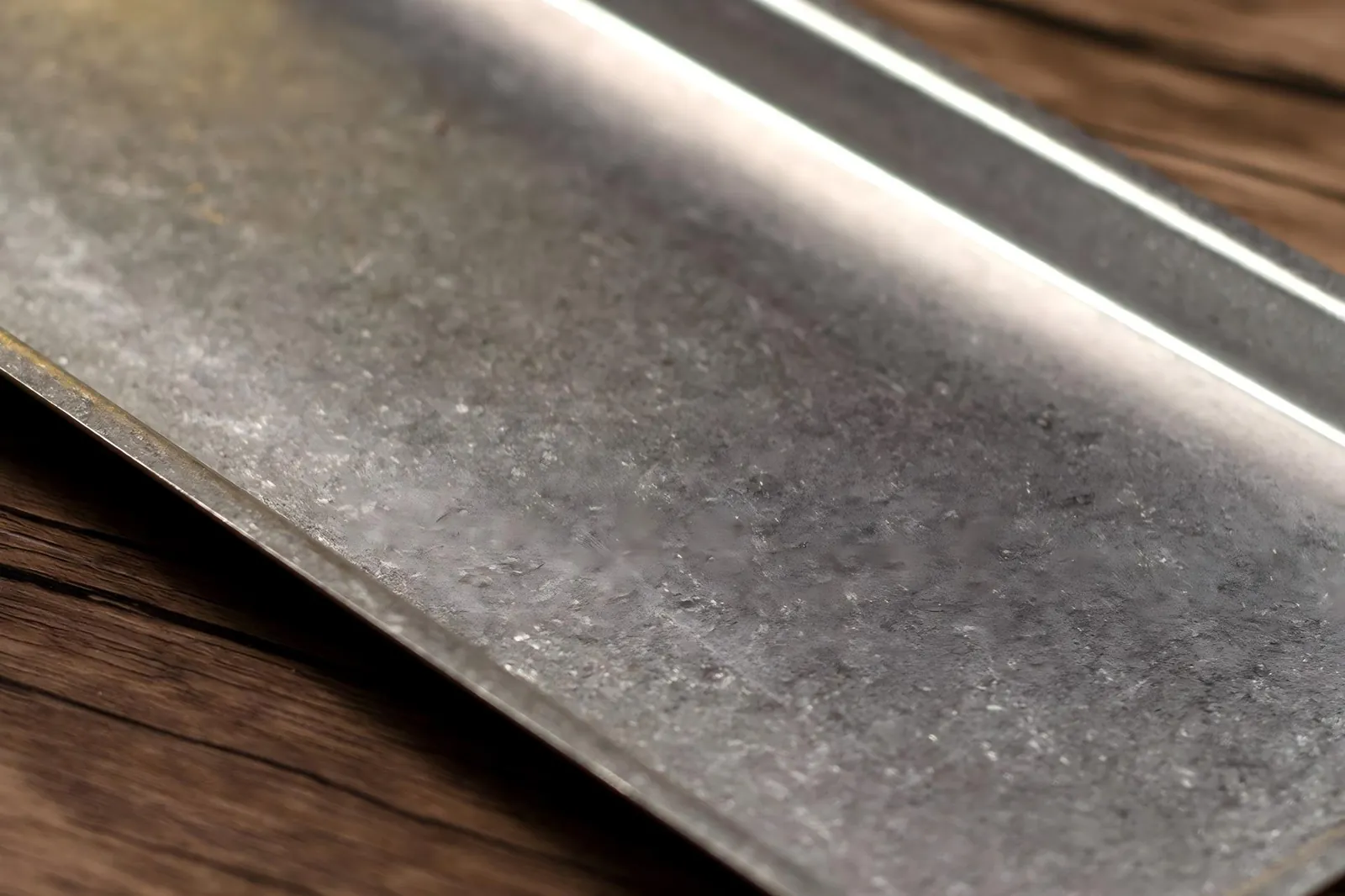
Our signature Snowflake Matte Gray finish is a proprietary matte treatment on 304 stainless steel, developed and registered as ZACSO's signature surface. Its practical advantages in daily use:
- Fingerprint-resistant. The matte micro-texture diffuses oils rather than showing them, so daily handling leaves far fewer visible marks than a mirror polish.
- Scratch-hiding. Fine scratches that would be obvious on a polished surface simply disappear into the matte texture. This is a genuine advantage in restaurants, cafeterias, and busy households.
- Cleaning routine is identical. Same rinse-dry habit, same dishwasher compatibility, same mild cleaners. Avoid abrasive pads and scouring powders here too — not because they will ruin the finish, but because any finish looks better without micro-scratches from the wrong tool.
For buyers, this matters commercially. A polished spoon shows every smudge between the wash and the table; a matte-finished fork still looks freshly serviced through a full dinner shift. If you are building a brand line and want a finish that photographs beautifully and survives real-world handling, read our deep dive on Snowflake Matte Gray: a signature stainless steel flatware finish.
Curious whether the Snowflake finish suits your product line? Request a sample and see it under your own lighting →
How Long Does 304 Stainless Steel Cutlery Last?
With ordinary care, 304 flatware has an exceptionally long service life:
- Home use: effectively a lifetime. Most 304 cutlery is retired because of taste or style changes, not material failure.
- Commercial use: 10+ years is routine in restaurants and hotels, even with hundreds of wash cycles per year — the SGS dishwasher test reflects this kind of sustained exposure at the material level.
What shortens the life is not washing frequency but chemistry abuse: bleach soaks, week-long brine exposure, and physical abuse (bending, prying). The steel itself does not "wear out" from washing; the chromium oxide layer reforms after every cycle.
For brands, that longevity is a selling point worth putting on the packaging — and a reason to pair the product with clear care instructions. Cutlery that lasts a decade builds repeat purchase and word-of-mouth; cutlery that spots in month three gets returned regardless of how good the steel actually is.
Care Instructions You Can Reuse: A Customer-Facing Checklist
If you private-label cutlery, feel free to adapt this list for your packaging or product page:
- Wash or rinse soon after use; don't let acidic or salty food sit overnight
- Dishwasher safe — standard detergent, normal cycle (material tested by SGS in 2022, sample-based, dishwasher safety PASS)
- Dry promptly with a soft cloth to prevent water spots
- Remove spots with a 5–10 minute white vinegar soak; rinse and dry
- Never soak in bleach, brine, or pickle liquid for extended periods
- Don't scrub with steel wool or chlorine-based cleaners
- Store dry, away from unprotected carbon-steel items
Clear care instructions are among the cheapest ways to protect a cutlery brand's review score. They also signal to buyers that you stand behind the material — a small trust-builder that compounds over time.
Conclusion: Small Habits, Decade-Long Shine
Stainless steel cutlery care and maintenance is not complicated. The whole system fits in four habits: rinse soon, wash normally (the dishwasher is fine for 304 — our 2022 SGS dishwasher test passed on exactly this), dry promptly, and avoid prolonged soaking in acids, brine, or bleach. Understand that "stainless" is resistant rather than immune, that spots are removable mineral film rather than damage, and that a matte finish like Snowflake Matte Gray reduces fingerprint and scratch visibility by design.
Whether you are a retailer writing packaging copy, a foodservice operator training kitchen staff, or a brand evaluating which finish to launch next, the same principle applies: protect the chromium oxide layer, and 304 protects your reputation.
If you are sourcing 304 stainless steel cutlery for your brand — including low-MOQ OEM and private-label programs — our team can walk you through materials, finishes, and care documentation. Contact ZACSO / RayOnMe today → and let's make sure your flatware is still shining in year ten.
Frequently Asked Questions
Is 304 stainless steel cutlery dishwasher safe?
Yes. 304 stainless steel is fully compatible with household and commercial dishwashers. Our 304 flatware samples were tested by SGS in 2022 and passed the dishwasher-safety protocol. Use standard detergent (not chlorine bleach formulas), avoid nesting pieces, and dry promptly after the cycle for the best finish.
Why does my stainless steel cutlery get water spots?
Water spots are mineral deposits — calcium and magnesium from hard water — left on the surface when droplets evaporate. They sit on top of the steel and are not damage. Drying cutlery promptly with a soft cloth prevents most spotting, and a short white vinegar soak removes spots that have already formed.
How do I remove stains or rust-colored marks from 304 flatware?
Soak in white vinegar for 5–10 minutes, rinse, and dry. For stubborn film, use a baking soda paste rubbed gently with the grain. Rust-colored smears are usually carbon-steel particles transferred from other items in the wash — vinegar or an oxalic-acid stainless cleaner lifts them without harming the 304 underneath. Avoid steel wool and chlorine bleach.
Does a matte finish like Snowflake Matte Gray need special care?
No. The cleaning routine is identical to polished 304: rinse, wash, dry. The matte micro-texture is fingerprint-resistant and hides fine scratches, so it tends to look better between washes than mirror-polished pieces. Just avoid abrasive scouring pads and powders on any finish.
How long does 304 stainless steel cutlery last?
In home use, effectively a lifetime — most pieces are replaced for style reasons, not failure. In commercial settings, 10+ years is routine even with hundreds of wash cycles per year. The main threats to longevity are chemical (bleach soaks, prolonged brine or acid exposure) rather than washing frequency.
Can I use bleach or salt-based cleaners on stainless steel cutlery?
No. Chlorine bleach and hypochlorite sanitizers attack the chromium oxide layer that protects 304, causing pinpoint pitting with prolonged exposure. Salt is less aggressive but should still not sit on the surface for days. Stick to standard dish detergents and mild acids like vinegar for cleaning.