The most valuable skill a restaurant or hotel buyer can learn is how to clean stainless steel flatware the right way — because the gap between a set that serves five years and one that pits out in eight months is almost never the steel. It is the care. We have watched two identical 18/10 (304) runs ship to different operators in the same month; eighteen months later one sent a photo of cutlery a decade old while the other still gleamed. Same alloy, same gauge, same price. Only the habits differed.
You probably landed here with a concrete problem: stainless steel flatware water spots that will not wipe off, orange rust freckles, or a dishwasher that seems to eat your investment one rack at a time. This guide explains what destroys flatware in a commercial kitchen and how to build a maintenance routine that pays for itself — covering rust prevention, detergent chemistry, hard-water management, rack loading, spot removal, replacement cost, and sourcing durable flatware.
Key Takeaways
- "Stainless" resists corrosion through a self-healing chromium oxide film; that film is destroyed by chloride, prolonged acid contact, and abrasive steel wool — not by ordinary use.
- A dishwasher extends flatware life only when you scrape first, load loosely, use rinse aid, and switch off heated dry.
- Hard water and over-alkaline detergent are the two biggest hidden killers in Middle East, North African, and Southern European kitchens.
- Light rust and water spots are reversible with baking soda and white vinegar — no replacement required.
- 18/10 (304) outlasts 18/0 and 201 in daily commercial service; specifying the right grade at purchase is cheaper than buying twice.
Why "Stainless" Still Rusts
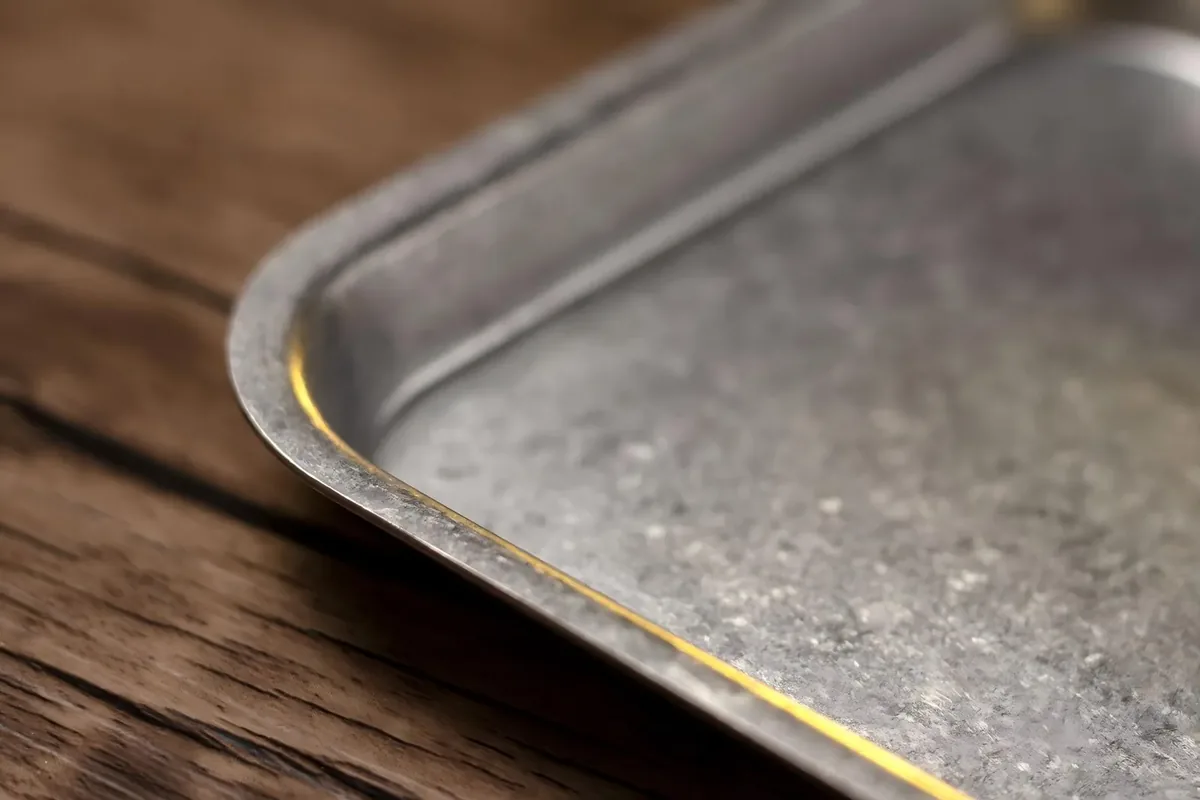
Stainless steel earns its name from a microscopic surface layer, not from being immune to corrosion. The 18% chromium in 304-grade flatware reacts with oxygen to form an invisible chromium oxide film — roughly two molecules thick — that seals the iron beneath from the environment. As long as that film stays intact, the spoon or fork is effectively inert. This is also why our flatware clears the food-contact standards that prove food safety — GB 4806.9-2023, FDA, (EC) 1935/2004, LFGB: the passive layer blocks metal migration into food.
The film fails for three reasons, none meaning you bought bad steel.
Chloride attack. Salt and chlorides — a salt-dusted fork or high-chloride detergent — punch microscopic holes in the passive layer, where pitting begins. This is the top cause of "rust spots" on good flatware.
Prolonged acid contact. Letting cutlery soak in a vinegar dressing, tomato sauce, or a citrus prep bath for hours eats the film from the outside in.
Abrasion. Steel wool, scouring powders, and some "cleaning" pads scratch through the layer faster than it can repair itself, especially if the surface is then left wet.
The part most guides skip: the film repairs itself within seconds when oxygen and a clean surface are present. So stainless rust is almost always a care failure, not a material one. Learning how to clean stainless steel flatware is really learning how to protect that film — and protecting it is the whole basis of stainless steel cutlery rust prevention. A Southeast Asian distributor once blamed our mill for "defective" 304 after a hotel client reported rust. The cause was a busser who stacked salty plates with the cutlery on them, then ran heated dry. The steel was fine; the routine was not.
Dishwasher Done Right
A commercial dishwasher is the best friend or worst enemy of your flatware depending entirely on how you run it. Done correctly, it is the most reliable method for dishwasher safe stainless steel flatware because it controls temperature, contact time, and rinse chemistry far better than hand washing. Done wrong, it accelerates exactly the corrosion you are trying to avoid.
The five steps below are the practical answer to how to clean stainless steel flatware in a commercial rack, and the protocol will extend flatware lifespan restaurant-wide once every operator follows it:
- Scrape and pre-rinse within 20 minutes of service. Do not let food — especially salty or acidic residue — dry onto the flatware. A quick cold rinse removes chloride before it can bite.
- Load loosely, never nested. Stacked spoons trap detergent and water between surfaces and create a corrosion cell. Place pieces in the flatware basket with space between them.
- Use a quality rinse aid. Rinse aid lowers surface tension so water sheets off instead of beading. Beads are where stainless steel flatware water spots form as minerals dry in place.
- Disable heated dry. This is the big one. Heated drying bakes residual minerals and detergent film onto the steel at high temperature and keeps pieces hot and wet long enough for pitting to start. Air dry instead.
- Unload promptly and towel the last droplets. Even with rinse aid, a few drops remain in bowl curves. A quick wipe prevents spot formation.
A Doha hotel group we supply learned this the hard way. Their banquet team ran heated dry on a 201-grade set in extremely hard water; within four months the dessert spoons showed orange freckling guests noticed. We disabled heated dry, added a citrate rinse aid, and loosened loading. The same alloy stopped rusting with no product change. That is commercial flatware maintenance doing the heavy lifting — the steel never changed.
Detergent & Water-Hardness Management
Two variables quietly decide whether your flatware reaches its design life: detergent alkalinity and water hardness. Mastering how to clean stainless steel flatware means controlling what touches it in the wash, not just how you rinse afterward.
Alkaline corrosion. Commercial detergents run highly alkaline to cut grease. Fine in short contact, but overdosing, concentrated cycles, or soaking flatware in the wash chamber lets the high pH dull and attack the film. Use the minimum effective dose and never let flatware sit in detergent.
Hard water. Calcium and magnesium leave the chalky film called stainless steel flatware water spots. In the Middle East, North Africa, and parts of Southern Europe, hardness often exceeds 200 ppm and sometimes doubles. Hard water deposits minerals, forces more detergent (worsening alkalinity), and with heated dry bakes them in — the core of stainless steel cutlery rust prevention in hard-water sites: cut the deposit before it sets.
Practical controls:
- Test your water. A $10 strip tells you hardness in grains or ppm. Above 120 ppm, treat it as a management problem, not an annoyance.
- Pair a softener with your machine in hard-water regions. Softened water cuts spotting sharply and lets you reduce detergent by up to a third.
- Choose low-chloride, low-phosphate detergents rated for stainless. Avoid added bleach unless a sanitize step genuinely requires it.
- Rinse aid is non-negotiable where water is hard. It is cheaper than replacing flatware.
A Riyadh restaurant measured incoming water at 280 ppm and ran full-dose detergent plus heated dry. After adding a softener and dropping to 70% detergent with rinse aid, monthly replacement fell from roughly 400 pieces to under 60. The water did not change — their management of it did. If you want cutlery engineered so this chemistry matters less, the grade you specify is the lever; our grade matters for rust prevention guide shows which alloy fits which water profile.
Rack Loading & Storage
Care does not stop when the wash ends. A big part of how to clean stainless steel flatware is what you do after the machine stops, because racking and storage are where surprising corrosion starts.
Density limits. Overloading the flatware basket is the most common mistake we see. When pieces touch in the wash, they form tiny electrochemical cells — one becomes the anode, one the cathode, and the anode corrodes. Keep at least a knife-width of space between pieces. Yes, it means more racks. It also means fewer replacements.
Dry before stacking. This rule is absolute: never nest damp flatware. Stacking wet spoons traps a film of water and detergent between surfaces, and that trapped chemistry is exactly what pits 18/10 over a weekend. Air dry on a rack, then store in a dry, ventilated caddy.
Avoid mixed-metal contact in storage. Carbon steel trays, cast-iron organizers, or bare steel shelving can transfer iron particles to stainless through abrasion, causing "rust" that is really cross-contamination. Use lined caddies or dedicated stainless bins.
Rotate stock. In a 300-seat operation, rotate which cases hit the floor so no single set absorbs every shift. Even durable 304 has a fatigue limit under constant mechanical and thermal cycling.
Good commercial flatware maintenance is mostly discipline. A 220-seat Gulf Coast chain posted one laminated sheet by the machine and logged a daily rinse-aid check; their 18/10 service, once replaced at 22 months, cleared four years and counting.
Removing Spots & Light Rust
By now you know how to clean stainless steel flatware that is still healthy; this section rescues pieces that already show spots. Caught early, nearly every spot and light-rust problem is reversible at zero cost — rebuild the passive film, do not sand it away.
For water spots and haze:
- Make a paste of baking soda and a little water (about 3:1).
- Rub gently with a soft cloth or non-abrasive sponge, following the grain of the steel.
- Rinse with warm water and dry immediately with a microfiber towel.
- If haze remains, wipe with a 1:1 white vinegar and water solution, then rinse and dry. The mild acid dissolves mineral film without harming the base alloy.
For light orange rust freckles:
- Soak a cloth in white vinegar and lay it over the affected area for 10–15 minutes.
- Sprinkle baking soda on top; it will fizz as it lifts the oxide.
- Scrub lightly with a soft brush, rinse, and dry completely.
- To re-passivate, wipe with a dilute lemon-juice or vinegar solution and dry — this nudges the chromium oxide film to reform.
Never use steel wool or wire brushes. They embed iron particles that become new rust seeds. After any spot removal, hand-dry the piece so no mineral film re-forms.
A three-café Porto chain adopted this vinegar-and-baking-soda reset on their 18/10 service. Replacements dropped from about 150 pieces a month to under 20, and their per-seat cost fell enough to show on the P&L. When you are ready to stop fighting chemistry you cannot control, the move is to buy durable restaurant flatware built for high-cycle service before your next reorder.
Grade-by-Grade Care
Not all "stainless" is equal; care difficulty scales with grade. grade matters for rust prevention because alloy composition dictates how forgiving your routine can be.
- 18/10 (304, EN 1.4301). 18% chromium, 8–10% nickel. The nickel stabilizes the passive film and gives the best corrosion resistance and shine. Most forgiving under commercial stress. This is our default for food-grade export.
- 18/0 (430 or 410). 18% chromium, no nickel. Magnetic, harder, cheaper, but less corrosion-resistant and more prone to tea-staining in hard water. Needs stricter detergent and drying discipline.
- 201. Higher manganese, lower nickel. Weaker corrosion resistance; acceptable for low-moisture, low-salt environments but a poor choice for dishwashers in humid or coastal sites. Rusts fastest of the three.
For a deep comparison of how each grade behaves in real service, see our grade matters for rust prevention guide. The short version: if your operation runs flatware through a commercial dishwasher daily, 18/10 pays for its small premium many times over.
TCO: The Real Cost of Replacements
Procurement teams fixate on unit price and miss total cost of ownership. Here is the math that changes minds — proof that how to clean stainless steel flatware is a budget line, not a chore.
Say you run 400 place settings of 18/0 flatware at $1.20 per piece, replaced every 18 months because of pitting. That is 400 × $1.20 = $480 per cycle, or about $320 a year. Switch to 18/10 at $1.80 per piece that lasts 60 months with proper care, and your annualized cost is 400 × $1.80 ÷ 5 = $144 a year — plus the labor of reordering, receiving, and re-inventorying three times less often.
| Option | Unit price | Lifespan | Replacements / 6 yrs | 6-yr product cost | Annualized |
|---|---|---|---|---|---|
| --- | --- | --- | --- | --- | --- |
| 18/0, poor care | $1.20 | 1.5 yrs | 4× | $1,920 | $320 |
| 18/10, poor care | $1.80 | 2.5 yrs | 2.4× | $1,728 | $288 |
| 18/10, good care | $1.80 | 5+ yrs | 1× | $720 | $120 |
Read the last column. Good care alone nearly halves annual spend on the same piece, and the right grade with good care cuts it by more than 60%. The table still understates the gap because it excludes reorder labor and the guest-complaint risk of cycling tired flatware.
Add the hidden cost: guest-visible rust hurts brand perception more than a $0.60 premium. One review photo of spotted cutlery can outweigh a year of savings. Do both — buy the right grade and maintain it. To stop overpaying for throwaway cutlery, buy durable restaurant flatware rated for your cycle volume.
Specifying Durable Flatware at Purchase
The cheapest flatware is the one you never replace. Specifying correctly at the sourcing stage removes most care problems before they start.
- Match grade to environment. Coastal, humid, or hard-water sites should standardize on 18/10. Save 18/0 for dry, low-salt service.
- Specify gauge by use. Heavier gauges (about 2.5–3.0 mm for forks) resist bending and the micro-cracks that invite corrosion.
- Choose a finish that hides wear. Mirror finishes show spots; satin or forged finishes tolerate hard water better.
- Verify certification up front. Insist on documentation for food-contact compliance in your target market.
- Buy from a manufacturer, not a middleman. First-hand sourcing means you can request the exact alloy and gauge your operation needs.
When you buy durable restaurant flatware, you are really buying years of avoided replacement cost. If material choice is on your mind, our grade matters for rust prevention explainer helps you specify with confidence. And for food-safety paperwork across markets, the standards that prove food safety guide maps every regulation we certify against.
Conclusion
Flatware failure is almost never about the steel — it is about the habits around it. Once you know how to clean stainless steel flatware and protect its passive film, the rest is consistency: scrape early, load loosely, kill the heated dry, manage your water hardness, dry before stacking, and treat light rust the moment you see it. Do that, and a well-specified 18/10 set will serve five years where an abused one fails in eight months.
The payoff is concrete: lower replacement spend, fewer guest complaints, a cleaner P&L. Audit your current dishwasher protocol against the steps above, then specify your next order for the environment it actually lives in.
Ready to put this into practice? shop commercial-grade flatware engineered for high-cycle commercial kitchens, or request a quote and we will help you match grade, gauge, and finish to your operation. Launching a branded line instead? Our low MOQ custom cutlery guide shows how small runs can still specify the right grade from day one. And for more sourcing and care guides in this series, explore more on our blog.
— Written by the RayOnMe stainless steel manufacturing team.
Request a quote for your project, or explore more on our blog.