
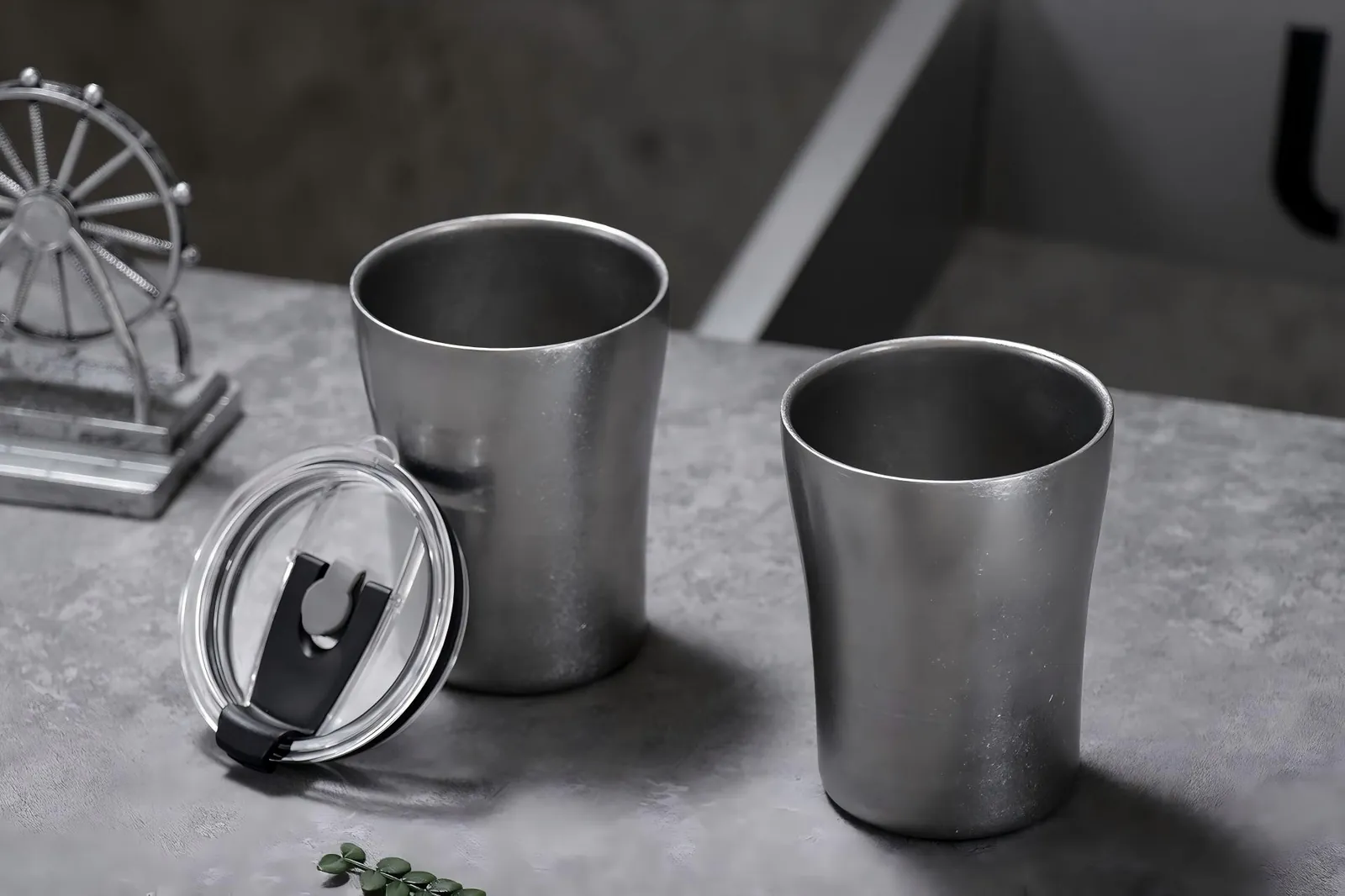
For most B2B programs — hotels, restaurants, catering, retail, and corporate gifting — 304 stainless steel cutlery wins the stainless steel vs ceramic vs plastic cutlery comparison because it combines commercial-grade durability, verified food safety, full recyclability, and a premium hand feel that neither ceramic nor plastic can match at volume. Ceramic looks beautiful but chips and breaks under daily service; plastic is cheap upfront but wears out fast, raises leaching questions, and weakens brand perception.
If you are sourcing flatware for a hotel group, a restaurant chain, or a retail line, this choice is not cosmetic. It affects replacement budgets, guest complaints, freight costs, and how your brand feels in a customer's hand. Below, we compare the three materials across durability, food safety, cost, sustainability, and brand value — and explain why we at ZACSO manufacture exclusively in 304 stainless steel for our B2B clients.
Key Takeaways
- 304 stainless steel is the only one of the three materials that is durable, food-safe (when properly tested), fully recyclable, and premium-feeling at the same time — which is why it dominates hotel, restaurant, retail, and gift programs.
- Ceramic cutlery offers striking aesthetics but is brittle: chipped edges become safety and liability issues in high-volume service.
- Plastic cutlery has the lowest unit cost but the shortest lifespan and the weakest premium perception, plus growing single-use restrictions in North America, Europe, and Australia.
- Grade matters as much as material: 304 (18/10) resists corrosion and daily dishwashing far better than lower grades; ZACSO produces only 304, tested by SGS in 2022 (sample-based).
- For B2B customization, 304 supports low-MOQ LOGO engraving from 100 pieces and custom shapes from 500 pieces — see our Low-MOQ OEM Stainless Steel Cutlery Guide.
The Quick Answer: How the Three Materials Compare
Before diving into detail, here is the side-by-side view buyers usually ask for when weighing stainless steel vs ceramic vs plastic cutlery for a commercial program.
| Criteria | 304 Stainless Steel | Ceramic | Plastic (incl. Melamine-style) |
|---|---|---|---|
| Durability in daily service | Excellent — bends before it breaks, survives thousands of wash cycles | Poor — brittle, chips and shatters on drops | Poor–fair — scratches, stains, cracks, fades |
| Food safety | Excellent when 304-grade and lab-tested | Good but glazes and hairline cracks can harbor bacteria | Moderate — heat-related leaching concerns with some plastics |
| Perceived value | High — weight and finish signal quality | High when new, drops fast once chipped | Low — reads as disposable |
| Dishwasher & heat tolerance | Excellent | Good, but chips expose rough edges | Limited — many plastics deform or degrade |
| Recycling / end of life | Fully recyclable, holds scrap value | Very limited recycling streams | Rarely recycled; single-use bans expanding |
| B2B customization (LOGO, shape) | Excellent — engraving, PVD, matte finishes | Limited — printing before firing | Printing only, wears off |
| Best fit | Hotels, restaurants, retail, gifting | Decorative/occasion use only | Events, airlines, takeaways only |
That single table explains most purchasing decisions we see. But each material deserves a closer look, because the failure modes — and the costs — show up at different points in a program's life.
Durability: Which Material Survives Commercial Daily Use?
Durability is where the comparison stops being close. Commercial cutlery is abused by design: dropped on tile, scraped across plates, stacked in bus tubs, and pushed through industrial dishwashers dozens of times per day.
304 stainless steel is an austenitic alloy with roughly 18% chromium and 8% nickel. The chromium forms a passive oxide layer that self-repairs after scratches, which is why a steel knife that looks "worn" after year one can still look presentable after year five. When a steel fork does fail, it usually bends — an annoyance, not a safety incident.
Ceramic fails differently. It is hard but brittle, and a drop onto a hard floor is usually terminal. The more dangerous failure is the partial one: a hairline chip that leaves a rough edge in a guest's mouth. In hospitality, that is not a replacement cost problem; it is a guest-experience and liability problem.
Plastic rarely fails catastrophically, which is exactly why it fails quietly. Knife tines dull, fork tines splay, surfaces scratch and turn gray, and stains set in after a few months of tomato-based sauces and coffee. The set you bought cheap becomes the set you replace twice a year.
Consider a typical case. A 140-room boutique hotel in the American Southwest ran a mixed program: ceramic-handled flatware in the signature restaurant and mid-range plastic-composite pieces for banqueting. Over an 18-month stretch, the food and beverage director — call him Daniel — tracked replacements. The ceramic-handled pieces ran a steady 4–5% monthly loss rate from chipping and breakage, mostly during bus-down and dishwashing. The plastic banquet pieces looked visibly gray and scratched within three quarters, drawing comments on review sites about "worn utensils." When the contract came up for renewal, Daniel consolidated everything onto 18/10 stainless flatware. Two years later, his monthly replacement rate had fallen below 1%, and housekeeping no longer flagged cutlery condition at all.
That pattern repeats across nearly every hospitality program we supply. Steel costs more per piece on day one and less per year every year after.
Food Safety: What Each Material Actually Puts Near Food
For a B2B buyer, food safety is not a marketing claim — it is a procurement requirement with documentation attached.
304 stainless steel is the benchmark food-contact alloy worldwide. Its corrosion resistance means it does not react with acidic foods (vinegar, tomato, citrus) the way lesser grades can, and it does not shed coating particles into food because nothing needs coating. The critical caveat: "stainless steel" on a carton does not guarantee 304. Our article Is 304 Stainless Steel Cutlery Food Safe? FDA & LFGB Facts explains what to verify in a supplier's test documentation — including why sample-based reports matter and what questions to ask before you order. For transparency: ZACSO's 304 cutlery has been tested by SGS in 2022 on a sample basis; we share those reports on request rather than claiming broad certification.
Ceramic glazed surfaces are generally food-safe when intact. The risk appears at the edges: chips and crazing (fine cracks in the glaze) create harboring points for bacteria and, in older or low-cost ceramics, may expose the underlying body. For tableware that takes daily mechanical abuse, those defects are a matter of when, not if.
Plastic is the most debated. The core concern is heat: hot food, hot dishwashers, and microwaves can accelerate migration of compounds from certain plastics into food, particularly with age and surface scratches. Melamine-style materials carry their own guidance against high-heat use. None of this means every plastic fork is dangerous — it means the safety envelope is narrow and depends heavily on correct use, which commercial environments do not always provide.
When you stack the three, 304 stainless is the only material whose food safety improves with verification and holds steady with abuse.
Ready to specify a food-safe, testable material for your next program? Contact ZACSO for SGS test documentation and 304 flatware samples →
Cost: Upfront Price vs. Total Cost of Ownership
Plastic wins the price tag comparison and loses everything after it. This is the part of the stainless steel vs ceramic vs plastic cutlery decision where spreadsheets beat intuition.
A plastic fork may cost a few cents; a 304 steel fork costs several times that. But run the numbers over a three-year window and the picture reverses:
- Plastic: replaced continuously — through wear, staining, and breakage — plus growing disposal costs and, in many jurisdictions, single-use fees or restrictions. Europe's single-use plastics rules and similar measures in parts of North America and Australia keep tightening.
- Ceramic: moderate replacement through chipping, plus breakage-driven overstock ("buy 20% extra because pieces will die"), plus the liability exposure of chipped edges reaching guests.
- 304 stainless: a one-time purchase with a replacement trickle measured in fractions of a percent per month, and residual scrap value at end of life.
There is also freight and inventory economics. Steel is denser than plastic, but because it survives, you order it once instead of four times — fewer shipments, fewer customs entries, less warehouse churn. For retail and gifting, a steel set also carries a price point that supports margin; a plastic set forces you to compete in a race to the bottom.
A home and kitchen retailer we worked with in Australia illustrates the flip side. The founder — call her Priya — had been importing budget plastic-composite cutlery sets that retailed around $9.99. Margins were thin, returns for "bent forks and rusty spots" were common, and reviews hovered near three stars. She switched the line to 304 stainless in a matte finish, retailed it at $34.90, and within two quarters the cutlery category's return rate dropped sharply while review scores climbed past 4.5. Same shelf space, a fraction of the service burden, triple the ticket.
Cheap cutlery is rarely cheap. It is just invoiced differently.
Brand Perception: The Hand-Feel Factor Buyers Underrate
Materials communicate before a single word of marketing does. Guests and customers judge your brand through their fingertips within seconds of picking up a fork.
Stainless steel signals substance. The weight, the cool touch, the way light moves across a brushed or matte surface — these read as quality across every market we serve, from North American steakhouses to Middle Eastern hospitality groups. This is also where finishing technology becomes a differentiator. Our signature Snowflake Matte Gray finish, for example, gives 304 flatware a distinctive soft-gray, fingerprint-resistant surface that photographs beautifully for retail packaging and holds up under commercial washing — the kind of visual identity plastic simply cannot carry.
Ceramic is the aesthetic leader when new — there is no arguing with a hand-glazed, speckled ceramic handle on a styled tabletop. We are happy to concede this: for a plated dessert concept or a boutique "experience" restaurant, ceramic has genuine charm. The problem is decay. A chipped ceramic handle does not look rustic; it looks neglected. Perception erodes with every defect, and in volume service, defects are guaranteed.
Plastic reads as disposable — sometimes intentionally (a food truck, a festival), but fatal for premium positioning. No hotel wants its banquet photos showing warped plastic knives, and no gift recipient perceives a plastic set as a gift.
The perception gap also compounds over time. Steel acquires a gentle patina of use; plastic and chipped ceramic acquire a reputation.
Sustainability: Recycling Reality vs. Green Marketing
Sustainability claims in cutlery marketing deserve scrutiny, so here is the unvarnished version.
304 stainless steel is one of the most recyclable materials in foodservice. It is a commodity alloy with established scrap streams worldwide; end-of-life flatware can be fully reprocessed into new steel with no downcycling. Because it lasts for years, its per-use environmental footprint shrinks every month it stays in service. That said, no material is "eco-friendly" purely by label — steel production is energy-intensive, and the honest claim is longevity plus recyclability, which is exactly what B2B procurement standards increasingly reward.
Ceramic is inert and long-lasting when it survives, but fired ceramic is effectively impossible to recycle economically. Chipped and broken pieces go to landfill, and the high failure rates we discussed mean high volumes of them.
Plastic faces the hardest math. Most food-contact plastics are rarely recycled in practice, contaminated cutlery even less so, and single-use items are the direct target of plastic bans across the EU, Canada, parts of the US, and Australia. For any brand with published ESG commitments, a plastic cutlery program is becoming a reporting liability, not just an operational one.
For buyers writing sustainability requirements into tenders, steel's combination of durability, recyclability, and verifiable material composition (a real 304 report, not a sticker) is the strongest defensible position of the three.
Why 304 Specifically — Not Just "Stainless Steel" — Wins for B2B
Choosing stainless steel is only half the decision. The grade determines everything: corrosion resistance, nickel content, washability, and what your supplier can honestly document.
- 304 (18/10): ~18% chromium, ~8–10% nickel. The global standard for food-contact flatware. Resists pitting from acids and chlorides far better than lower grades and keeps its finish through years of commercial dishwashing.
- 430 and other 400-series grades: chromium without nickel. Cheaper, magnetic, and more prone to rust spotting and edge wear in humid or high-salt environments — a common cause of one-star "rusty flatware" reviews.
- 316: excellent corrosion resistance, but its molybdenum adds cost with little practical benefit for dry-use cutlery, which is why we skip it and focus on doing 304 properly.
We cover the grade mechanics in depth in two companion pieces: Stainless Steel Cutlery Grades Explained: 304 vs 430 (and Why We Skip 316) and, if you are deciding between the two workhorse grades, 304 vs 430 Stainless Steel Cutlery: Which Grade Fits Your Brand.
Two B2B-specific reasons 304 wins at ZACSO:
- Customization without compromise. 304's workability supports deep LOGO laser engraving (MOQ from 100 pieces), custom molds and shapes (MOQ from 500 pieces), and premium finishes like our Snowflake Matte Gray — all on a material that will still look branded after two years of dishwashing.
- Documented quality at stock scale. With 262+ ready-stock SKUs in 304, buyers can launch quickly from proven molds, then move to full private label as volumes grow. Every program is backed by our 2022 SGS sample test reports — transparency over marketing.
Neither ceramic nor plastic offers an equivalent: you cannot engrave a brand into a material that chips in a month and expect the investment to last.
Comparing grades or planning a custom program? Start with the 304 vs 430 Stainless Steel Cutlery: Which Grade Fits Your Brand breakdown, then request a quote and samples from ZACSO →
Which Material Fits Your Business Model?
The comparison narrows to fit by use case:
- Hotels and restaurants: 304 stainless, without reservation. Round-the-clock washing, constant drops, guest-facing quality — steel is the only material engineered for all three. Ceramic belongs only in low-turnover, chef-plated settings where pieces are handled individually.
- Catering and banqueting: 304 stainless. High volumes and transport stacking punish both ceramic (breakage) and plastic (scratching and bending). Steel amortizes across hundreds of events.
- Retail and e-commerce: 304 stainless for any positioning above "utility." Retail buyers in North America, Europe, and Australia increasingly filter out plastic on sustainability grounds, and ceramic's breakage rates in shipping and home use generate returns.
- Corporate gifting and promotional programs: 304 stainless. An engraved steel set is a gift that stays in the drawer for years — daily brand impressions at a one-time cost. Engraving MOQ of 100 pieces makes this accessible even for mid-size campaigns.
- Airline, takeaway, and single-event use: the one honest niche for plastic, where cost per use trumps longevity — though even here, regulatory pressure is pushing operators toward reusable or compostable alternatives.
Across every recurring-use scenario, the answer to the stainless steel vs ceramic vs plastic cutlery question converges on the same place: 304 stainless steel.
Frequently Asked Questions
Is stainless steel cutlery better than plastic? For any repeated or premium use, yes. 304 stainless steel lasts for years against plastic's months, does not scratch, stain, or deform under heat, is fully recyclable, and carries far stronger perceived quality. Plastic's only decisive advantage is a very low unit cost for genuinely single-use scenarios.
Is ceramic or stainless steel better for restaurants? Stainless steel. Ceramic looks striking when new but chips and shatters under commercial volume — dropped trays, bus tubs, and dishwashing cycles guarantee defects. A chipped ceramic edge is both a guest-safety issue and a brand problem. Ceramic suits decorative, low-turnover settings; steel suits service.
Is 304 stainless steel eco-friendly and recyclable? 304 is among the most recyclable food-contact materials available, with established steel scrap streams and no downcycling at end of life. Its per-use footprint shrinks the longer it stays in service. The accurate framing is "long-lasting and fully recyclable" rather than an absolute eco claim — and that combination is what tenders increasingly require.
Does plastic cutlery leach chemicals into food? Certain plastics can release compounds into food when exposed to heat, acidity, or surface wear, and aged, scratched plastic is more prone to migration. Melamine-style materials have specific high-heat restrictions. Risk depends on the polymer and conditions of use — which is precisely why heat-exposed, repeatedly washed commercial environments favor inert 304 stainless steel.
Why choose 304 stainless steel for B2B cutlery programs? Because 304 is the global benchmark food-contact grade: it resists corrosion and daily dishwashing, accepts LOGO engraving and premium finishes (MOQ from 100 pieces for engraving, 500 for custom molds), and can be documented with laboratory testing. ZACSO manufactures exclusively in 304, with 262+ ready-stock SKUs and SGS test reports from 2022 (sample-based) available on request.
The Bottom Line: 304 Stainless Wins the B2B Comparison
Stainless steel vs ceramic vs plastic cutlery is, in practice, a comparison of three different lifespans. Plastic competes only on day-one price and loses on every metric that compounds: durability, safety, perception, and sustainability. Ceramic competes on first-impression beauty and loses to fragility in any high-volume setting. 304 stainless steel is the only material that scores well on durability, verified food safety, recyclability, customization, and premium feel simultaneously — which is why hotels, restaurants, retailers, and gift programs across North America, Europe, Australia, and the Middle East keep consolidating onto it.
If you are planning a flatware program — from a 100-piece engraved gift run to a full private-label line — we will help you choose the right 304 set, finish, and customization level, and back it with real test documentation.
Talk to ZACSO about your 304 cutlery program → Samples, SGS reports, and OEM quotations — no obligation.